

Air Jordan Shoes Breakdown: High-Top vs Low-Top Silhouettes
Deciding between high-top and low-top Air Jordan shoes is one of the most popular debates experienced by sneakerheads in 2026. Both silhouettes hold decades of basketball history and fashion credibility, yet they address notably different functions on and off the basketball court. High-top models defined Michael Jordan’s career, providing the ankle protection that assisted him rule the NBA through six championship runs. Low-top models, conversely, became a lifestyle-forward option that focuses on mobility and seasonal flexibility. Grasping the actual differences between these two formats can help you avoid regret and help you build a more balanced collection. In this breakdown, we break down athletic performance, wearability, fashion, and cost so you can arrive at a smart decision on your next pair of Air Jordans.
The Background Behind Both Styles
When Peter Moore created the inaugural Air Jordan 1 in 1985, high-top construction was the unchallenged standard for basketball footwear. The high collar surrounded Michael Jordan’s joint and grew into an signature aesthetic detail that Nike promoted forcefully during the “Banned” marketing campaign. It was not until the Air Jordan 11 Low launched in 1996 that Jordan Brand meaningfully experimented with the low-cut design for a signature silhouette. That release confirmed that sneakerheads would welcome get your air jordan shoes right here a reduced version of an well-loved shoe, setting the stage for low-cut versions of almost every numbered Jordan. By the mid-2000s, low-top Jordans had grown into a warm-weather essential, regularly depleting alongside their high-cut siblings. As of now in 2026, Jordan Brand releases about equal numbers of high-top and low-top colorways each three months, demonstrating even buyer interest across both formats.
Ankle Support and On-Court Performance
High-top Air Jordans reach 2 to 3 inches above the ankle joint, creating a tight collar that restricts lateral movement during intense movements and jumps. Shoes like the Air Jordan 1 High and Air Jordan 12 employ padded collars combined with firm heel cups to stabilize the entire foot during game situations. According to a 2024 research paper published in the British Journal of Sports Medicine, high-top basketball sneakers lowered the frequency of sprained ankles by approximately 28 percent compared to low-profile models in casual athletes. Low-top Jordans, such as the Jordan 1 Low and Jordan 11 Low, sacrifice some of that ankle support in exchange for a lighter build — typically shaving 50 to 80 grams per shoe. For weekend warriors who compete in rec-league games once or twice a week, that weight reduction means faster first steps and lower exhaustion over longer games. The sacrifice is tangible, though: if you have a past ankle problems, a high-top sneaker with tight lacing remains the more secure choice for any basketball play.
How Pleasant Is Each Cut for Extended Wear
In everyday life, comfort requirements shift dramatically, and low-cut Jordans often come out ahead. The shorter collar height removes the discomfort that high-top models can generate against the Achilles tendon during long walks. Many users report that Jordan Lows feel ready after just two or three outings, while high-top models may require five to seven sessions before the ankle padding completely breaks in. Sole technology stays the same across both constructions — the Air Jordan 1 incorporates the same Air sole unit irrespective of height, and the Jordan 11 maintains its full-length Air unit in both versions. Heat is another practical consideration: low-tops permit significantly more airflow around the joint, rendering them the top pick for spring and summer when overheating grows into an problem. For fall and winter or full days of wear, the warmth offered by a high-top collar can genuinely benefit you, holding warmth trapped around the ankle area.
Style and Outfit Versatility
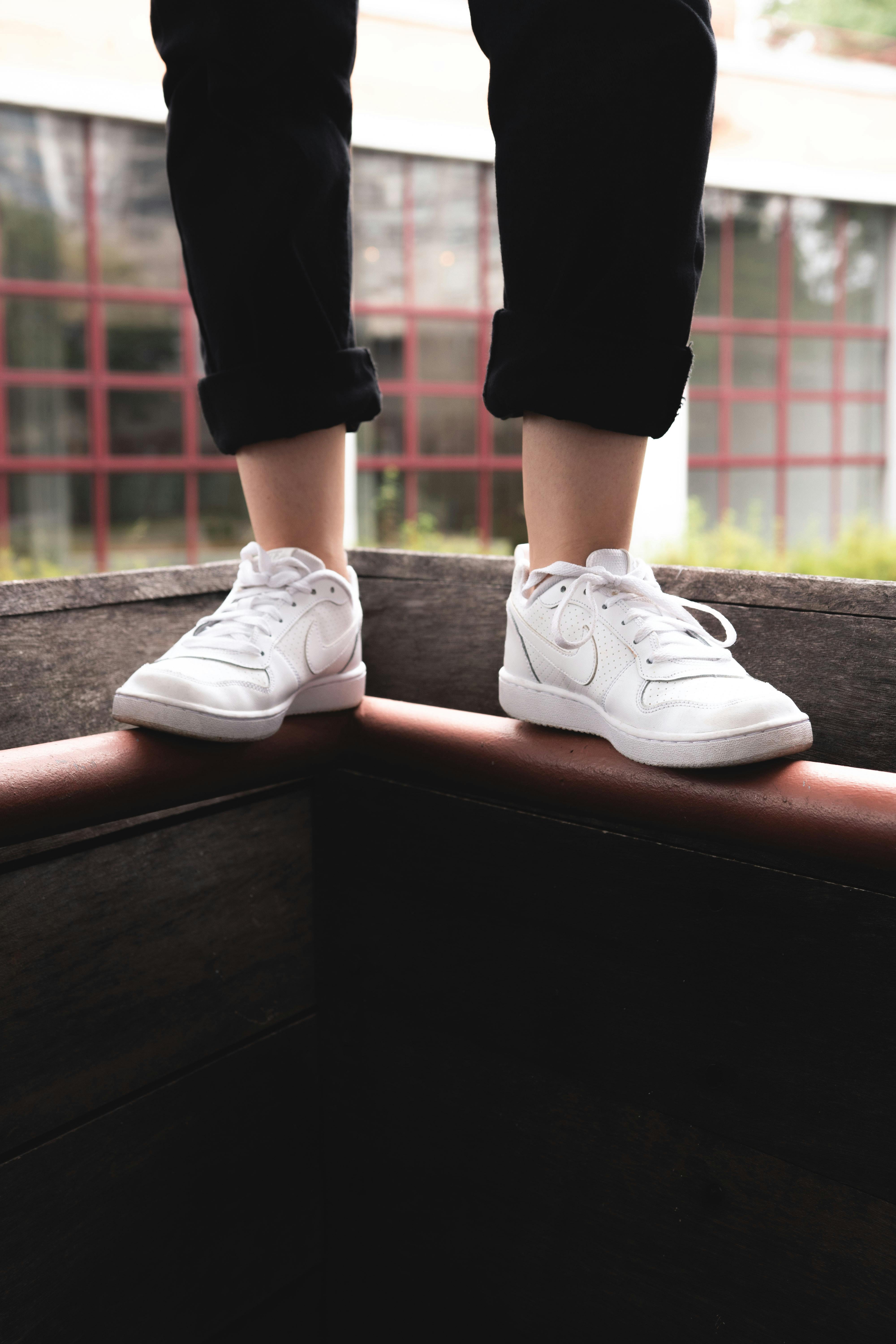
From a visual angle, high-top Air Jordans grab attention and function as a standout element in any fit. The Air Jordan 1 High, in editions like Chicago, Bred, and Royal, consistently features as the most photographed sneakers on Instagram and TikTok, producing millions of tagged posts on Instagram alone. High-cut Jordans look best with slim or tapered pants, sweatpants, and shorts that let the full design to be on display — concealing a high-top under loose jeans undermines its design intent. Low-cut Jordans, on the other hand, offer a slimmer silhouette that pairs effortlessly with a larger selection of fits, encompassing straight-leg jeans, chinos, and even dressed-up trousers. Style-conscious sneaker enthusiasts in 2026 commonly style low-tops as a bridge shoe that connects streetwear and office-appropriate looks. The styling flexibility provides low-cut models a modest advantage for consumers who desire a one pair to cover various settings throughout the week.
Color and Material Considerations
High-top Air Jordans generally include more canvas, which enables designers to include complex color blocking and diverse textures across the shoe’s upper. This additional surface area is why celebrated editions like the Jordan 1 High “Union LA” and “Travis Scott” collaborations seem so visually striking — there is simply more surface area to utilize. Jordan Lows condense that same aesthetic into a smaller canvas, which can either look cleaner or appear cluttered depending on the release. Leather, nubuck, suede, and patent leather all feature across both formats, though luxury fabrics often appear more often in high-top special editions. In terms of toughness, the added construction on a high-top means somewhat greater shielding against abrasion around the ankle area. Collectors prioritizing keeping their Jordans flawless for years commonly choose taller versions for this practical consideration alone.
High-Top vs Low-Top: Head-to-Head Comparison
| Attribute | High-Top Air Jordans | Low-Top Air Jordans |
|---|---|---|
| Ankle Stability | Outstanding — covers above the ankle | Low — rests under the ankle bone |
| Weight per Shoe | 400–500 g per shoe | 340–420 g per shoe |
| Optimal Season | Fall / Winter | Spring / Summer |
| Style Versatility | Streetwear, athletic | Streetwear, casual, semi-formal |
| Break-In Period | 5–7 wears | 2–3 wears |
| Resale Premium | Generally higher | Moderate |
| Breathability | Average | Superior |
| Average Retail Price | $170–$200 | $130–$170 |
Resale Pricing and Collectibility
In the resale market, high-top Air Jordans have traditionally attracted higher markups than their low-cut siblings. Pricing data from StockX shows that the Air Jordan 1 High OG records a 40 to 60 percent price increase over MSRP in desirable editions, while the Jordan 1 Low OG generally posts a 15 to 30 percent premium. Limited-edition high-tops, particularly those associated with collabs with fashion figures like Virgil Abloh or Travis Scott, have hit resale prices above $2,000 in deadstock condition. Low-cut models are gradually narrow the difference, however, as Jordan Brand invests more heavily in exclusive low-profile releases geared toward lifestyle consumers. The Travis Scott x Air Jordan 1 Low Reverse Mocha, for example, fetched far above $1,500 on secondary markets throughout 2023 and 2024. For collectors focused on long-range returns, high-tops remain the more reliable choice, but the low-cut segment is growing fast and should not be overlooked.
Which Should You Buy?
Your choice ultimately comes down to how and where you intend to use your Air Jordans. If playing ability is important to you — even at a pick-up level — the support benefits of a high-top are compelling, and the extra ankle support can prevent ankle injuries that would keep you out for weeks. For everyday wear across multiple contexts, a low-top Air Jordan offers superior versatility, reduced mass, and an faster break-in experience that works perfectly with a fast-paced schedule. Price-sensitive shoppers will also benefit from that low-tops generally cost $20 to $40 cheaper than their high-top versions, expanding your sneaker budget additionally. If possible, a well-rounded lineup contains at least one of each: a high-top for bold outfits and colder months, and a low-top for laid-back summer wear. Take stock of your existing wardrobe, evaluate your lifestyle, and consider your climate before deciding. Whichever style you pick, you are acquiring a model rooted in over 40 years of design innovation from Jordan Brand.
The Ultimate Conclusion
The high-top versus low-top debate has no one right answer because both cuts thrive in unique situations. High-top Air Jordans deliver excellent ankle support, stronger aftermarket values, and a more dramatic style statement that dominates sneaker photography and sneaker conventions. Low-top Air Jordans counter with lighter construction, quicker break-in periods, broader outfit compatibility, and a more budget-friendly retail price for beginning collectors. In 2026, Jordan Brand continues to push boundaries across both styles, launching new cushioning technology and eco-friendly materials that upgrade both choices year over year. The most strategic approach is to assess each pair on its own merits rather than following a universal rule for one format over the other. Whether you lace up highs for a Saturday sneaker event or step into a low-top pair for a summer barbecue, the Jumpman logo on your foot bears the same legendary weight.